Empty Seats
A Cartography
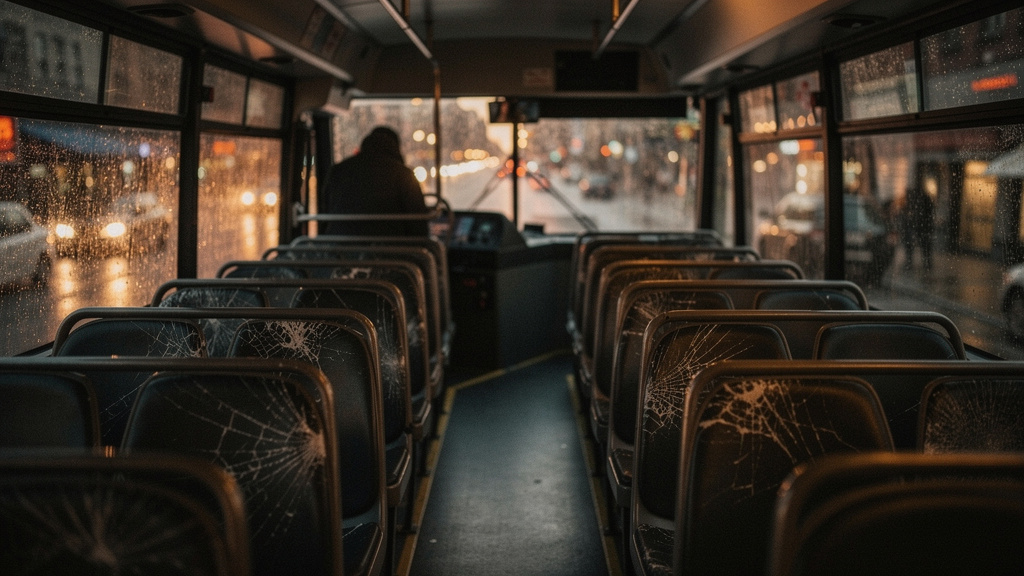
The bus rumbles down Sherbrooke Street, a mobile island of strangers held together by the promise of destination. You sit by the window, watching the city blur into a mosaic of storefronts and streetlights. Across from you, a woman occupies the double seat, her eyes fixed on a book that seems to be absorbing her entirely. The title, The Myth of Sisyphus (in French), is a nod to the existential musings that fill the silence between stops.
As the bus navigates the gentle curves of the road, you notice the way the woman's fingers trace the edges of the pages, as if searching for hidden meaning in the text. It's a gesture that speaks of a deeper longing, a quest for connection in the vast expanse of the city. The bus, with its cargo of solitary travelers, becomes a metaphor for the human condition; a journey through the mundane, punctuated by moments of profound insight.
The woman looks up, catching your gaze for a fleeting instant. It's a moment of mutual recognition, a silent acknowledgment that you're both suspended in the same sea of uncertainty. The bus pulls away from the curb, leaving behind the crowded sidewalk, and carries you both toward unknown destinations.
In this moment, you realize that love isn't about grand gestures or sweeping declarations. It's about the quiet, unspoken moments – the glances, the smiles, the shared silences. It's about the cartography of empty seats, where the spaces between people become the contours of a deeper connection.