The Eucharist of Emergency Rooms
Waiting for Diagnosis, Finding Each Other Instead
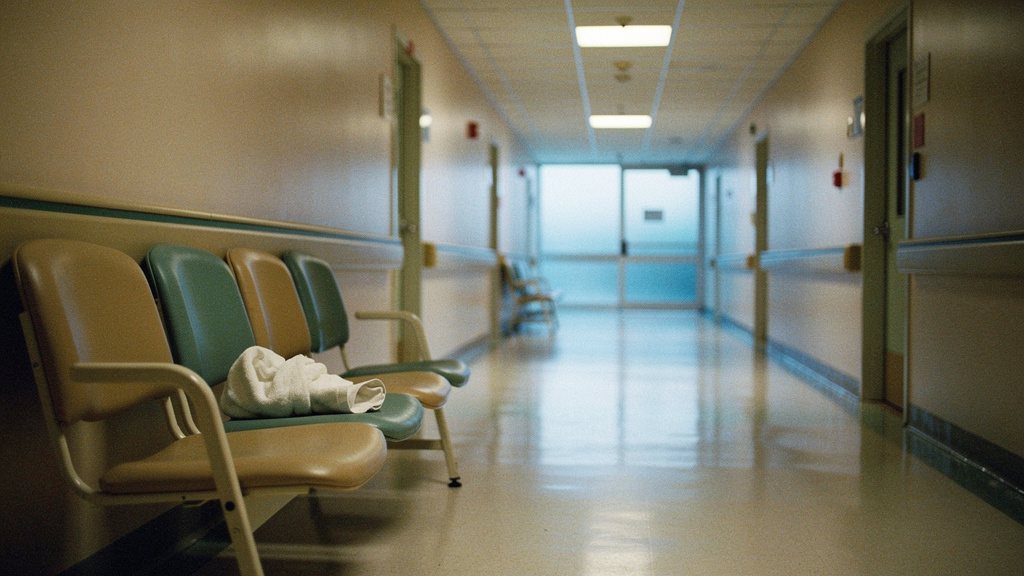
The emergency room at Saint-Mary's smells like industrial disinfectant and sour milk, that particular cocktail of bleach and human anxiety that seeps into your clothes. It's 3 a.m., and you're here because your chest feels like someone's sitting on it. Probably nothing, definitely something, the eternal maybe of bodies that betray us.
She's across from you, holding a dish towel around her left hand, blood seeping through the terry cloth like a secret she can't quite keep. "Cooking accident," she says when she catches you looking. "I was trying to julienne carrots at midnight. Who juliennes carrots at midnight?"
"Someone who can't sleep," you answer, and there it is; that recognition, that small nod that says we are the same species of insomniac, we who prepare elaborate meals for no one, who read Proust in bathtubs, who end up bleeding in waiting rooms.
The triage nurse calls numbers like a bingo game nobody wins. B47. A23. C91. We're all letters and numbers here, reduced to our symptoms, our pain scales from one to ten. But between the announcements, in the fluorescent purgatory, she tells you about the dinner she was making—"Boeuf bourguignon, but the Montreal version, with maple syrup instead of sugar"—and you tell her about the tightness in your chest that started during a faculty meeting about posthumanism.
"Maybe your body's rejecting academia," she says, and when she laughs, the sound cuts through the waiting room's symphony of coughs and moans like church bells through fog.
Hours pass. Dawn leaks through the windows. Her number gets called first. Before she goes, she leans close, whispers: "The thing about emergency rooms is they make you realize what's actually an emergency."
You never see her again, but sometimes, when you're cooking alone at unreasonable hours, you think about her bloody dish towel, about the way love sometimes begins with wounds, with the admission that we're all just trying not to bleed out in public.