Bus Stop Theology
at the Corner of Nowhere and Maybe
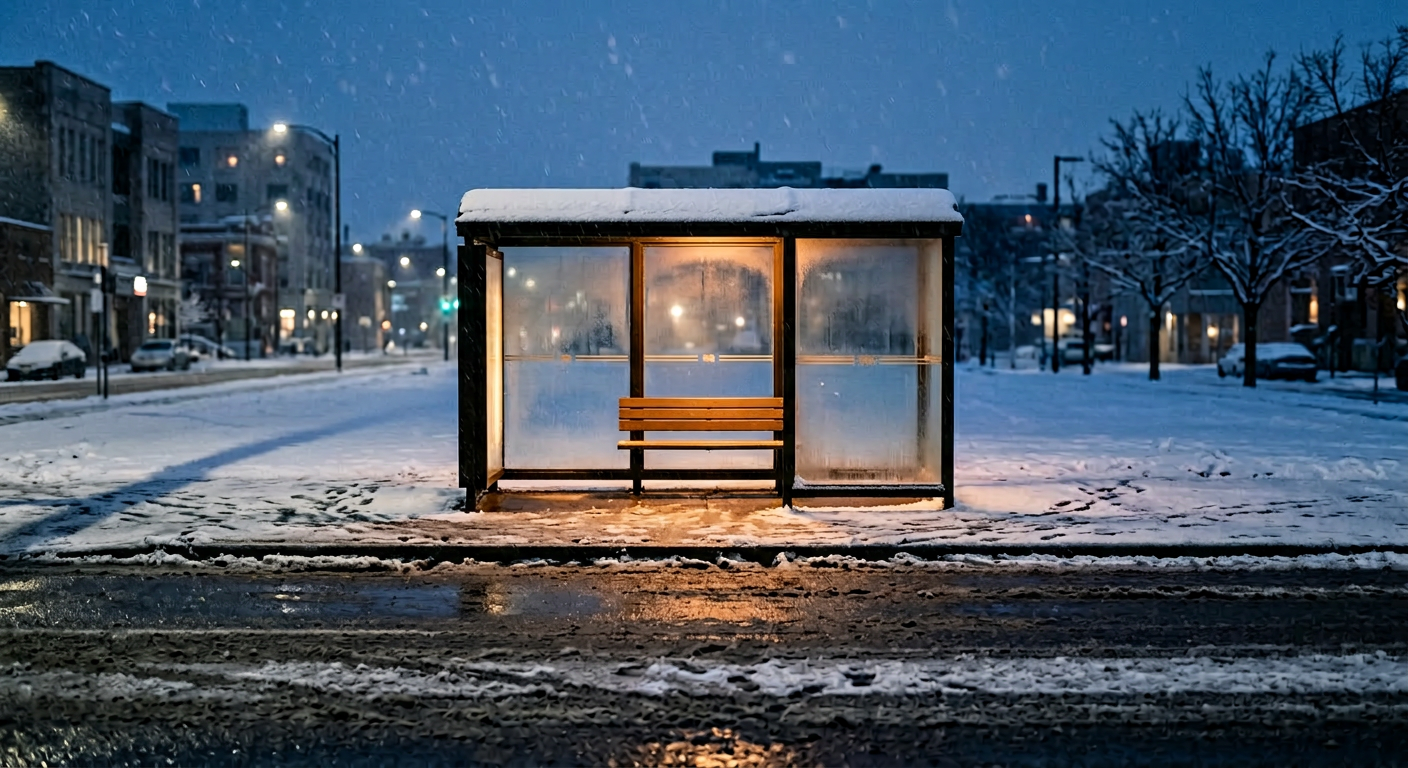
The bus is twenty minutes late, which in Montreal winter feels like a lifetime. We're strangers until the cold makes philosophers of us all. You stamp your feet, I blow on my hands, and somewhere between frozen and waiting, we start talking about time.
"In French," you say, "we say 'j'ai froid': I have cold. Like it's something we possess. In English, you are cold. Like it's something you become."
I consider this, how language shapes what we can feel. "Maybe that's why anglophones leave," I say. "We become the winter. Francophones just hold it for a while."
You laugh, breath visible in the air like punctuation. We discuss whether waiting is passive or active, whether bus stops are liminal spaces or destinations unto themselves. You quote Beckett. I counter with Camus. The bus still doesn't come.
A taxi passes. We could share it, split the fare and the conversation. But we don't move. We're committed now to this waiting, this accidental intimacy born of public transit and bad timing.
When the bus finally arrives, we sit separately, the spell broken by movement, by the return to our individual destinations. But for twenty-three minutes, we were philosophers of the quotidien, finding meaning in delay, connection in complaint.