The Philosophy of Parking Garages
Where Love is a Ticket Stub and a Forgotten Car
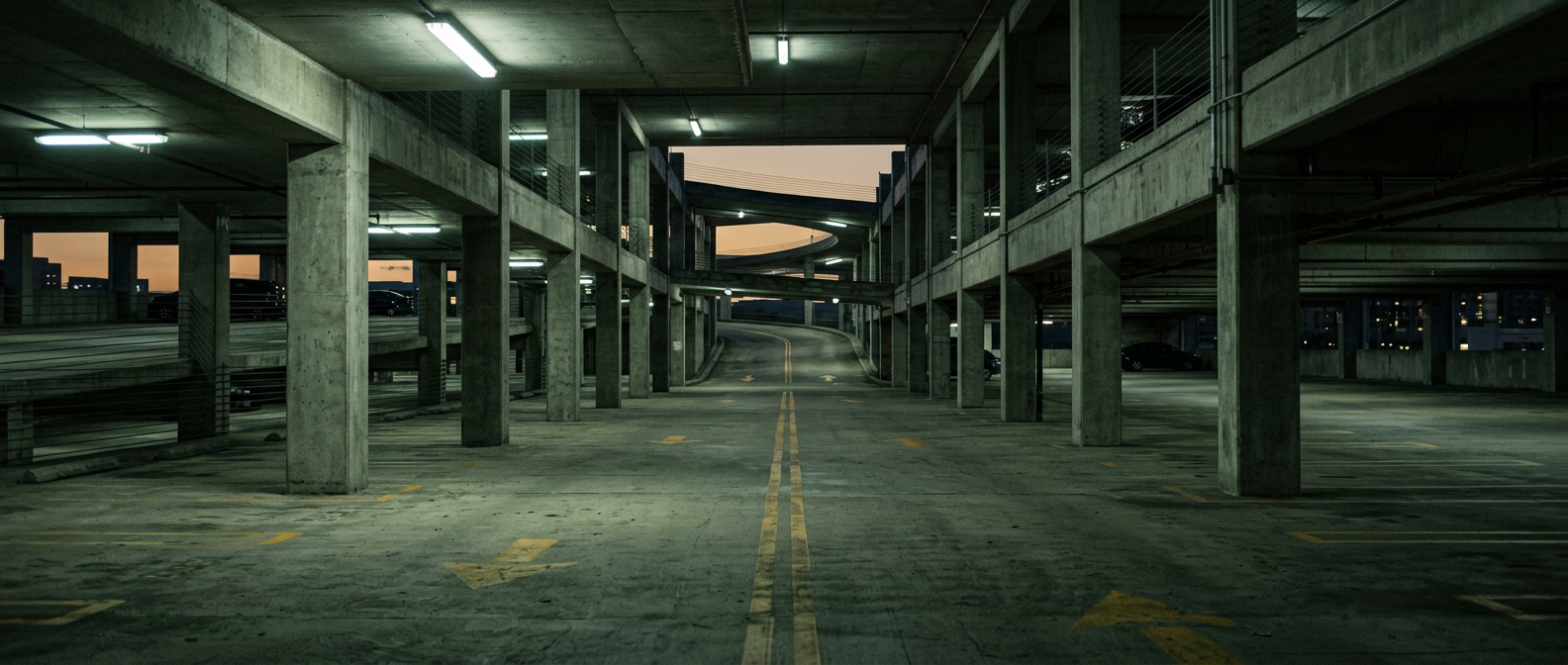
You find her in the third level of the parking garage on Stanley, arguing with a ticket machine that has swallowed her credit card. No help in sight, just the machine.
“This is Kafkaesque,” she mutters, her voice echoing off the concrete walls. You just left your own vehicle one floor up, but something about her frustration pulls you closer.
“Kafka would’ve loved parking garages,” you say, leaning against the machine. “Existential dread, fluorescent lighting, and the constant search for an exit.” She turns, her eyes narrowing in amusement. “You sound like someone who’s been stuck here before.”
Parking garages are liminal spaces: neither inside nor out, neither arrival nor departure. They’re where you go to hide from the city, or maybe from yourself. You help her jimmy the card out with a key, and she introduces herself as Cassandre, a name that feels both familiar and foreign.
You talk about the absurdity of modern life, how we spend our days circling for meaning in a world designed for transit. “Love,” she says, “is like finding your car in a garage with no signs. You just have to trust you’ll recognize it when you see it.”
When you finally part ways, you realize you’ve forgotten to ask for her number. Or maybe that’s the point; some encounters are meant to be fleeting, a moment of connection in a place built for passing through. You leave the garage with a ticket stub in your pocket, a reminder that even in the most mundane spaces, love can be a detour worth taking.