The Language of Parking Garage Echoes
Echo echo echo
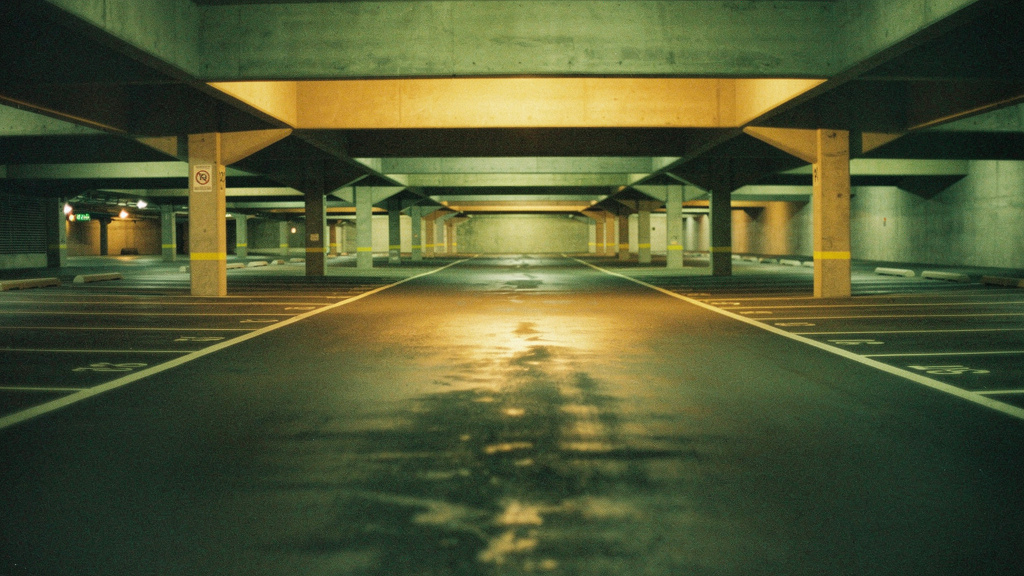
Montreal’s parking garages are monuments to forgotten destinations. They are concrete cathedrals of cars, their interiors echoing with the phantom sounds of footsteps, slamming doors, and the lonely whine of an engine struggling to start. You’re meeting her here, in the dimly lit labyrinth beneath the city, a place where intimacy feels both clandestine and strangely inevitable. The air is cool and damp, carrying the metallic tang of exhaust and the faint, sweet scent of something that might be decay, or perhaps, just old oil.
You call her name, and your voice bounces off the reinforced walls, a series of fragmented echoes that seem to multiply and distort. It’s a language of its own, this echoing space, a testament to how our words, our intentions, can reverberate long after they’ve been spoken. You see her emerge from the shadows, her silhouette sharp against the muted glow of the emergency lights.
She walks towards you, and the sound of her footsteps is a clear, distinct rhythm against the cacophony of echoes. You speak, and your words are swallowed by the vastness, then returned to you, slightly altered. “I tried to text,” you might say, and the garage whispers back, “text, tex, texxx.” It’s a fitting metaphor for love, isn’t it? A constant negotiation between what is said and what is heard, between the intended meaning and the reverberations it leaves behind. Here, in the hushed, echoing heart of the city, you find not just each other, but the realization that connection itself is an echo, a response to a call that may have originated in a place you can no longer quite remember.