The Silence of Abandoned Factories
In the Ruins of Industry, We Build Something New
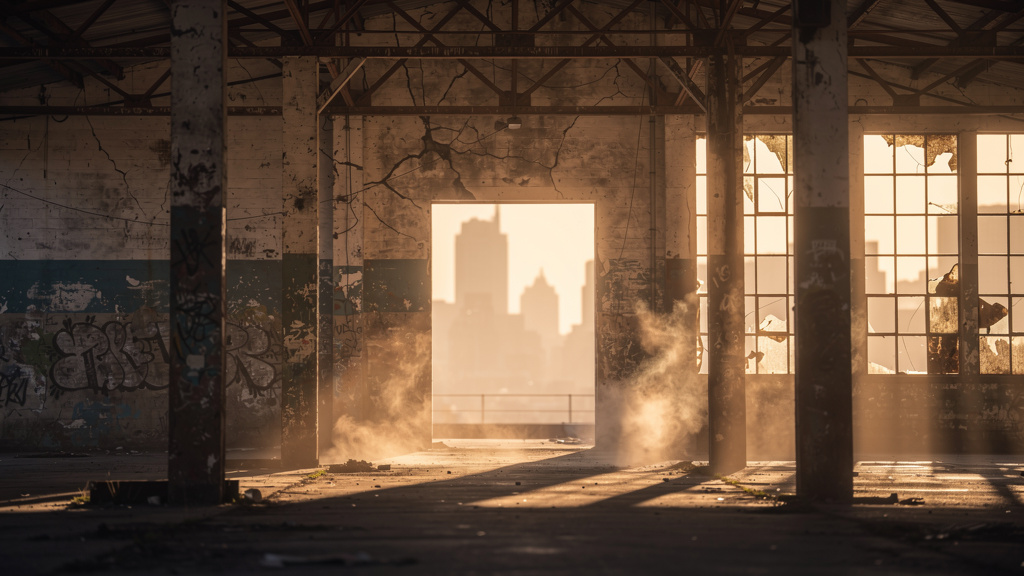
The old Molson brewery in Griffintown echoes with ghosts of fermentation, decades of yeast and hope turned to rust and graffiti. You've brought her here because she said she wanted to see "real Montreal," not the Old Port postcards but the city's broken teeth, its industrial cavities.
The acoustics in abandoned spaces do something to voices, make them both larger and smaller, more honest maybe, or just more alone. When she speaks, asking about the history, the demolition plans, her words bounce off the concrete and return transformed, like they've been translated through time.
"My grandfather worked here," you tell her, though it's only half true. Someone's grandfather worked here, everyone's grandfather worked somewhere like here, before the city decided factories were embarrassing, before condos became the only architecture that mattered.
She runs her fingers along the walls, reading the graffiti like braille. Someone has spray-painted "JE T'AIME" over older text that says "FUCK GENTRIFICATION." The palimpsest of the city, you think, love and rage occupying the same space, the same moment.
You climb the stairs to the roof, where the city spreads out like a patient etherized upon a table. The sun is setting, painting the abandoned factory gold, making even decay look like desire. She kisses you there, sudden and certain, and the sound of it, the small wet sound of connection, echoes through the empty building, multiplies, becomes a chorus.
"I don't usually do this," she says, which is what everyone says in abandoned buildings, in moments that feel stolen from regular time.
Later, when the factory is demolished for luxury condos, you'll think about that echo, how it's probably still trapped somewhere in the rubble, that sound of two people finding each other in a space the city had already forgotten. Love, like abandoned factories, is always about what was and what might be, the gap between demolition and construction where anything feels possible.